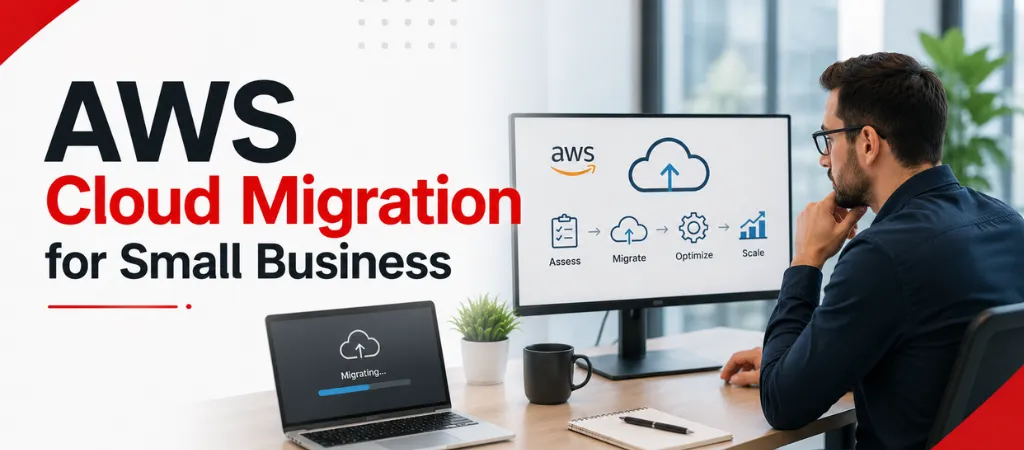
Moving from on-premise servers to AWS can reduce hardware costs, improve reliability, and make remote work far easier to support — but the pricing and timelines quoted online range so widely that many small business owners have no idea what to actually budget. This guide breaks down realistic 2026 cost ranges specifically for small businesses (not enterprise migrations), what drives the price, and what a properly managed, zero-downtime migration should look like from start to finish.
Why Small Businesses Are Moving to AWS
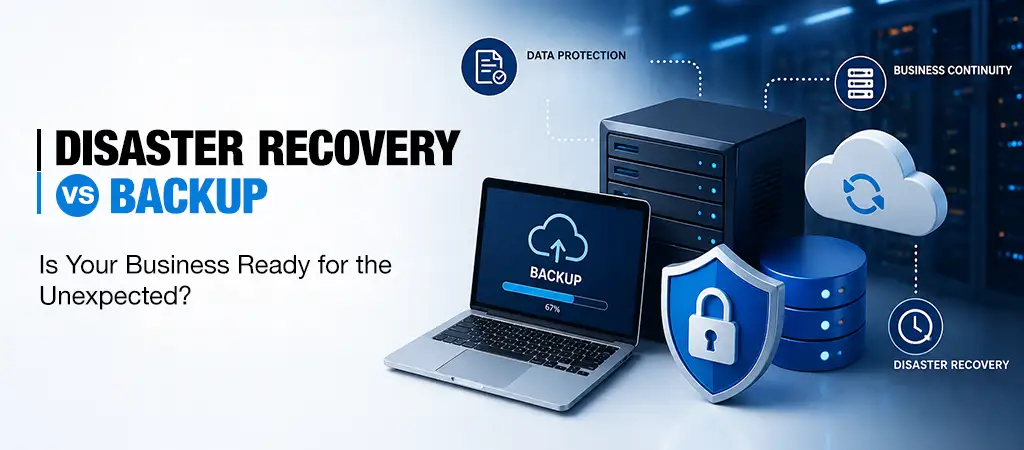
Aging on-premise servers eventually hit a wall: rising maintenance costs, hardware failures with no redundancy, and limited ability to support remote or hybrid staff. AWS and other cloud platforms replace that fixed hardware cost with scalable, pay-as-you-go infrastructure, while also improving disaster recovery posture — data hosted across AWS’s redundant infrastructure is inherently more resilient than a single on-premise server closet.
Realistic 2026 Cost Ranges for Small Business AWS Migration
Business Size
Typical Migration Cost (2026)
Notes
Small business, single workload
$3,000–$8,000
Straightforward lift-and-shift
Small business, ~5 servers
~$15,000 all-in
Common small-office scenario
Small-to-mid business, more complex
$50,000–$250,000
Compliance needs, custom applications, larger data volumes
For most small businesses with a handful of servers and relatively standard business software, cost tends to land closer to the lower end of this range — the higher figures typically apply once compliance requirements, custom application refactoring, or large data volumes enter the picture.
What Actually Drives Migration Cost Up or Down
Number of workloads and servers being migrated
Data volume, since transferring large amounts of data (data egress) adds both cost and time
Migration strategy chosen— a straightforward “lift-and-shift” is faster and cheaper than refactoring applications to be cloud-native
Parallel-running window— every week your old and new infrastructure run simultaneously adds cost, since you’re paying for both environments at once
Compliance requirements, which add security controls, audit logging, and documentation overhead for regulated industries like healthcare and legal
A Realistic Migration Timeline
Small businesses with a modest server footprint (roughly 5–20 servers) typically complete a cloud migration in 2 to 6 months, compared to 6–18 months for mid-market environments and considerably longer for complex enterprise migrations. Attempting to compress this timeline too aggressively is one of the most common causes of budget overruns, since skipping proper assessment and testing phases tends to create expensive problems later in the project.
The Migration Process Step by Step
Assessment— inventory current servers, applications, and data to build a clear picture of what’s actually being migrated.
Planning and strategy selection— deciding which applications move as-is versus which need modification for the cloud.
Pilot migration— testing the process on a low-risk workload first to catch issues before a full rollout.
Phased migration— moving workloads in planned waves rather than all at once, validating each before proceeding.
Parallel running and validation— running both environments briefly to confirm the new setup performs correctly before final cutover.
Cutover and decommissioning— switching fully to the new environment and retiring old infrastructure once confidence is established.
AWS Migration Credits Most Small Businesses Never Claim
AWS offers migration credits through its Migration Acceleration Program that can cover a meaningful portion of migration costs for qualifying projects — yet a significant share of small businesses never claim them, largely because the program runs through AWS partners and requires a structured assessment to qualify. Working with a partner familiar with this program can meaningfully reduce the effective cost of a migration that would otherwise be paid entirely out of pocket.
Common Migration Mistakes to Avoid
Treating migration as a one-time projectrather than budgeting for ongoing optimization afterward
Skipping the assessment phaseto save time upfront, which frequently costs more in mid-project surprises
Ignoring compliance requirementsuntil late in the process, particularly for healthcare, legal, or financial businesses
Underestimating data egress costs and timewhen large volumes of data need to move
Not testing a pilot migration first, which increases risk on the full-scale rollout
Is AWS the Right Fit, or Should You Consider Alternatives?
AWS is one of several major cloud platforms, alongside Microsoft Azure and Google Cloud. For businesses already using Microsoft 365 extensively, Azure sometimes offers smoother integration; for businesses prioritizing raw compute cost, providers may quote meaningfully different rates for equivalent configurations. The right choice depends on your existing software stack, team familiarity, and specific workload needs — a cloud migration specialist should walk through this comparison honestly rather than defaulting to a single platform regardless of fit.
How Ovron Inc Approaches Cloud Migration
Ovron Inc plans and executes cloud migrations with a zero-downtime approach: thorough assessment, a pilot migration to validate the process, phased rollout by workload, and parallel-running validation before any final cutover. We help small businesses evaluate whether AWS, Azure, or another platform is the right fit for their existing software stack, and assist with identifying available migration credits where applicable.
Small business migrations typically range from $3,000–$8,000 for a single workload, up to roughly $15,000 for a small office with around five servers, with costs rising for more complex environments involving compliance requirements or custom applications.
Small businesses with a modest number of servers (roughly 5–20) typically complete migration in 2 to 6 months, depending on complexity and how thoroughly the assessment and testing phases are handled.
Yes. A phased approach with parallel running — where the old and new environments operate simultaneously briefly for validation — allows most migrations to be completed with minimal to no disruption to daily operations.
AWS’s Migration Acceleration Program offers credits that can offset a meaningful portion of migration costs for qualifying projects. These typically require working through an AWS partner and completing a structured assessment to access.
Conclusion
For most small businesses, AWS migration costs land in the low thousands to mid-teens of thousands of dollars, with realistic timelines of two to six months when the process is properly phased and tested. The businesses that avoid budget overruns are consistently the ones that invest in a thorough assessment upfront rather than rushing straight to migration.
Considering a move to the cloud?Schedule a Consultationwith Ovron Inc for a cloud migration assessment and realistic cost estimate.